Buyer guides · Developer planning · 8 min
Starting a glamping site: the accommodation decisions that set your capital
We build the cabins, not the business plan. This is the part of starting a site we can speak to with numbers — and the part most guides skip.
Published by AeroPodHomes · Updated 30 August 2026
What this covers, and what it does not
Most guides to starting a glamping business begin with marketing, booking platforms and brand. This one concentrates on the accommodation package: what belongs in delivered cost, what each pitch needs before a unit arrives and how a phased room schedule affects freight. Occupancy and nightly rate remain operator assumptions and should be tested independently from the building quotation.
Three decisions set most of your capital
First, pitch count — not how many you eventually want, but how many you open with. Second, the room format, because that decides both the build and the freight. Third, and most underestimated: whether every room carries its own bathroom or the site runs a shared ablution block. That third one moves more money than the first two combined, because in-room wet areas multiply plumbing runs across the site and take more container volume per room. Rooms with shared facilities are usually cheaper per pitch; rooms with private bathrooms usually earn a higher rate. Neither is right in general — it depends on your market and your ground.
What a pitch needs before a unit lands on it
The building is the visible cost; the pitch is often the less developed allowance. Each pitch needs a level load-bearing support prepared to the issued drawing, a route a lorry and crane can reach, and power, water and drainage brought to a prepared interface. On a greenfield site, the service spine to the furthest pitch can be a major cost line. Foundations, lifting, connections, installation labour and local consent normally belong to local project scope unless the contract reallocates them.
Freight is a bigger swing than unit price
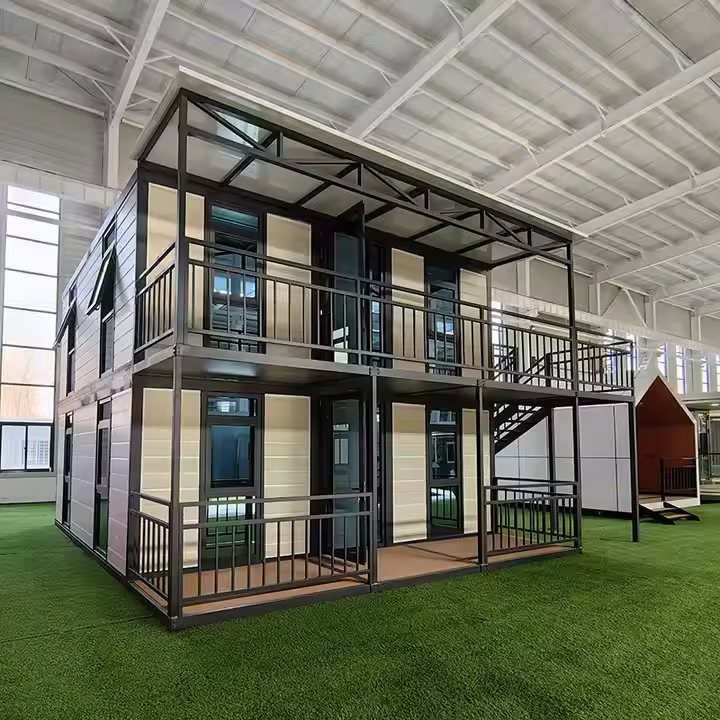
Two offers that look close at the factory gate can be far apart on your invoice. Twelve folding units load into one 40HQ container — 168 m² of finished floor area in a single movement — against six of the smaller expandable units, one 40FT expandable, or a capsule that will not fit inside a standard container at all and travels as out-of-gauge cargo. Work out your pitch count, divide by units per container, and you have the shipping line before anyone quotes you.
Phasing beats a big first order
A small first phase can test room planning, guest response and operations before a later release. Freight still needs its own check: a partial container can carry a much higher shipping cost per room than a rational programme load. A useful first shipment therefore balances learning goals with the actual packing plan.
What belongs in the plan a lender will read
Named lines, not a lump sum: units, packing, freight per container, destination charges and duties, foundations and groundworks, service spine, crane and installation labour, consent and professional fees, and a contingency you have actually reasoned about. A quotation that cannot be split into those lines cannot be compared to another one, and cannot be defended to anyone lending against it.
Common questions
How much does it cost to start a glamping site?
Separate the allowance into accommodation supply, logistics and pitch preparation. A comparable figure depends on pitch count, room format, destination, service distances and local work, so a published per-pod figure is only useful when its inclusions and exclusions are stated.
How many pods should I start with?
Choose a phase large enough to test the room and operating model while keeping the later site plan intact. Then compare the learning benefit with freight utilisation, because a partial container can carry a much higher shipping cost per room than a rational programme load.
Do I need planning permission for glamping pods?
That is decided locally and varies by country, region and how long the units stay in place, so it sits with you and a local consultant. What we supply is the technical side of the answer — dimensions, structural basis, loadings and the drawing set — so the application is made against real documents rather than a brochure.
Can I run a capsule house or cabin as a short-term rental?
Many buyers do, and the unit is no different from any other building in that respect — occupancy, licensing, insurance and tax treatment are set where the site is, not by the manufacturer. What we can tell you is exactly what arrives, what remains to be done on site, and what the building is warranted for, so the operating decisions are made against facts.
Should each pod have its own bathroom?
It is the single biggest cost decision on the site. In-room wet areas multiply plumbing runs and take more container volume per room; a shared ablution block is usually cheaper per pitch but changes what you can charge. Price both against your pitch count before choosing — the answer flips depending on ground conditions and how far services have to run.
What can a manufacturer contribute to a feasibility model?
The supplier can define the delivered-cost structure, room quantities, programme and document scope. Occupancy, room rate and operating cost remain project assumptions that the developer and operator should test with market evidence.