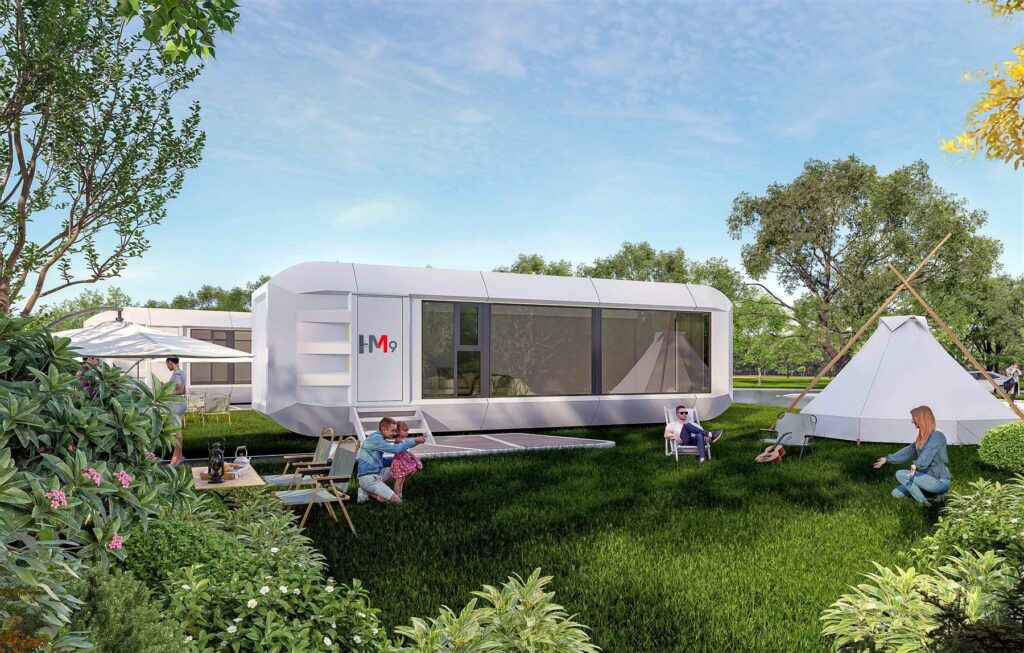
Quick Buyer Summary: A resort developer should choose a modular housing product by matching the product structure to the project revenue model, the installation site, the shipping route, and the buyer’s operating risk. A space capsule house is the strongest choice when a scenic resort needs a premium guest experience, panoramic glazing, furnished interiors, and strong visual marketing value. An apple cabin is the strongest choice when a hospitality project needs a compact residential feel, warm cabin aesthetics, and repeatable layouts for rental villages or ADU-style accommodation. An expandable container house is the strongest choice when a buyer needs fast deployment, larger usable area after unfolding, and efficient shipping for workforce housing, site offices, emergency housing, or cost-controlled accommodation. A folding container house is the strongest choice when a project needs temporary space, high transport density, and repeat relocation. A folding garage is the strongest choice when a site needs covered parking, equipment storage, boat shelter, or a movable workshop. AeroPodHomes recommends that every buyer confirm quantity, destination port, local climate, foundation method, utility connection, interior package, installation equipment, and compliance expectations before asking a factory for a final quotation.
1. Modular housing buyers should start with product-market fit, not only price.
A modular housing buyer should define the commercial job before comparing factory prices. A resort project needs guest appeal, photography value, comfort, and long-term outdoor performance. A project camp needs fast deployment, transport efficiency, simple maintenance, and predictable installation. A distributor needs repeatable models, clear optional packages, reliable documentation, and stable supply. A government or NGO buyer needs durability, speed, easy relocation, and a low-risk procurement process.
A modular housing product has a different value curve from a conventional building product. A factory-built capsule home can shorten site disruption because most interior work happens before delivery. A factory-built expandable house can reduce transportation volume because the unit travels compact and opens into a larger floor area on site. A folding container house can support repeated deployment because the frame and panels are designed for compact storage and fast setup. A folding garage can solve an operational problem because a vehicle shelter or equipment store usually requires less interior finish than a dwelling unit.
A published market reference shows that many space capsule house pages promote models from about 15 square meters to 38 square meters. A published market reference shows that several expandable container house pages promote 20-foot and 40-foot formats that open into roughly 30 to 74 square meters of usable area. A published market reference shows that folding container house suppliers often highlight 12 units per 40HQ container for specific foldable formats. A published market reference shows that some capsule suppliers publish typical price bands near USD 8,900 to USD 18,700 for selected resort-grade capsule models. A buyer should treat every public number as a benchmark rather than a final price because configuration, destination, loading method, currency, and compliance requirements change the final quotation.
| Product keyword | Best-fit project | Regional project focus | Buyer risk to answer |
|---|---|---|---|
| space capsule house manufacturer | Premium resort lodging and scenic stays | Guest experience, panoramic view, furnished delivery | Outdoor durability and local installation |
| apple cabin prefab house manufacturer | Cabin resorts, ADU-style stays, rental villages | Residential comfort, compact layout, repeatable design | Foundation, insulation, and planning approval |
| expandable container house manufacturer | Workforce housing, offices, emergency housing | Compact shipping and larger usable space after expansion | Site access, unfolding method, and utility connection |
| folding container house manufacturer | Temporary housing, camps, storage, field offices | Rapid relocation and transport density | Service life, anchoring, and climate resistance |
| folding garage manufacturer | Vehicle shelter, boat storage, workshop space | Movable covered space for operations | Wind exposure, door clearance, and anchoring |
AeroPodHomes positions the product catalog around practical procurement decisions. AeroPodHomes separates space capsule homes, apple cabins, expandable container houses, folding container houses, and folding garages because each product line answers a different buyer intent.
2. A space capsule house manufacturer should help resort developers protect guest experience and site ROI.
A space capsule house is a factory-built accommodation module designed for scenic visibility and fast guest-ready installation. A space capsule house usually creates value through design impact, panoramic glazing, compact land use, and furnished interior delivery. A resort developer should choose a space capsule home when the unit itself will become part of the marketing story. A resort developer should avoid choosing a capsule home only because the exterior looks futuristic because guest comfort and maintenance access decide long-term operating performance.
A published market reference shows that capsule house pages often present compact models near 15 square meters and flagship models near 38 square meters. A published market reference shows that some capsule suppliers describe deployment windows such as 15 to 25 business days for selected ready-to-install units. A published market reference shows that several capsule pages emphasize CE, ISO, smart controls, panoramic glass, aluminum exterior panels, and climate adaptation. A buyer should request drawings, material specifications, electrical standards, plumbing interfaces, insulation data, glass specifications, and installation guidance before comparing capsule house prices.
A hillside resort example shows how capsule homes can support a premium lodging strategy. A hillside resort planning 24 capsule homes can place high-view units on concrete pads or pier foundations while preserving slope vegetation. A hillside resort can use one-bedroom capsules for couples and larger capsule models for families. A hillside resort can create higher average daily rates when each module has a distinctive view, a private entrance, a comfortable bathroom, and a strong photo angle for booking platforms. A hillside resort still needs utility planning because water pressure, sewage distance, electrical routing, fire access, and maintenance paths affect guest operations after opening.
A space capsule house buyer should ask the manufacturer for climate-specific configuration. A cold-climate project should confirm insulation value, heating capacity, window condensation control, pipe freeze protection, and snow load assumptions. A coastal project should confirm corrosion-resistant finishes, fastener specifications, sealing details, and ventilation. A desert project should confirm roof heat performance, HVAC sizing, UV-resistant exterior materials, and dust sealing. A forest project should confirm fire separation, access roads, drainage, and maintenance clearance around each unit.
A space capsule house manufacturer should provide a project quotation that includes model, dimensions, usable area, interior package, exterior material, standard furniture, electrical standard, optional smart control, packing method, loading quantity, destination port, estimated production time, and after-sales support. A buyer should request photo and video proof from the factory because factory evidence reduces supplier risk for international orders. A buyer should also review the AeroPodHomes project process before finalizing a capsule order.
3. An apple cabin prefab house manufacturer should answer compact comfort, rental use, and planning questions.
An apple cabin is a compact prefab cabin product with a rounded or softened exterior profile and a more residential feeling than many container-based products. An apple cabin works well for cabin resorts, ADU-style stays, backyard studios, small hospitality clusters, and long-stay accommodation. An apple cabin buyer often cares about interior comfort, exterior design, window placement, roof profile, facade color, bathroom configuration, and guest perception. An apple cabin manufacturer should therefore answer layout, insulation, utilities, foundation, and delivery questions before discussing decorative customization.
A published market reference shows that apple cabin manufacturer pages often highlight factory scale, CAD design, OEM or ODM service, custom color, custom layout, plumbing customization, packing method, and export method. A published market reference shows that some apple cabin pages promote sizes from about 7 square meters to 27 square meters. A published market reference shows that many apple cabin pages are still thin on buyer guidance because many pages show product cards without explaining installation, compliance, rental operations, or distributor packaging. AeroPodHomes can use that content gap by explaining how apple cabins should be evaluated for real projects.
A cabin resort example shows the procurement logic for apple cabins. A lakefront operator planning 18 apple cabins should compare the expected room rate, the size of each plot, the privacy distance between units, the direction of the entrance, the bathroom location, and the guest pathway. A lakefront operator should choose a standard cabin model when the project needs repeatable installation and predictable maintenance. A lakefront operator should choose custom options only when exterior color, window placement, terrace design, or interior package affects the brand story or local approval process.
An apple cabin buyer should separate design preferences from mandatory specifications. A mandatory specification includes overall size, usable interior area, steel frame, wall system, insulation layer, window specification, electrical system, plumbing interface, bathroom fixture package, kitchen option, HVAC option, exterior cladding, and floor finish. A design preference includes color, furniture style, lighting atmosphere, soft furnishings, decorative wall panels, terrace railings, and signage. A buyer can reduce quotation delays when the buyer labels each request as mandatory, optional, or future upgrade.
An apple cabin manufacturer should help a distributor create a standard model matrix. A distributor can sell a base model, a hospitality model, and a premium model when the factory provides stable specifications and clear upgrade packages. A base model can focus on shell, bathroom, basic lighting, and utility readiness. A hospitality model can include furniture, curtains, HVAC, exterior lighting, and a guest-ready bathroom. A premium model can include terrace options, smart lock, upgraded glazing, custom color, and brand-specific interior finishes.
AeroPodHomes recommends that apple cabin buyers prepare a site plan, desired room mix, occupancy target, destination country, climate condition, preferred interior level, and delivery schedule. AeroPodHomes can then recommend suitable apple cabin models for resort suites, ADU-style accommodation, vacation rentals, and compact commercial lodging.
4. An expandable container house manufacturer should prove usable area, transport efficiency, and installation readiness.
An expandable container house is a prefabricated unit that ships in a compact form and expands on site to create a larger usable room layout. An expandable container house is usually stronger for workforce accommodation, temporary offices, emergency housing, classrooms, clinics, sales centers, and cost-controlled rental units than for luxury scenic lodging. An expandable container house buyer should evaluate unfolded area, folded transport size, mechanism reliability, floor structure, wall insulation, water drainage, and utility readiness.
A published market reference shows that some expandable container house pages describe a 20-foot unit that expands from a compact shipping footprint into about 30 to 40 square meters of usable area. A published market reference shows that some suppliers describe 20-foot, 30-foot, and 40-foot formats with expanded areas around 36 to 74 square meters. A published market reference shows that some pages claim two complete expandable units can be loaded into one 40-foot container for selected configurations. A published market reference shows that some suppliers state installation by four workers within about one hour for certain models. A buyer should verify every installation claim against the selected model, site equipment, ground condition, and utility plan.
A construction camp example shows the practical value of expandable container houses. A contractor building a 60-person camp can use expandable units for dormitories, offices, dining space, medical rooms, and storage. A contractor can reduce on-site construction time when the factory pre-installs wiring, plumbing-ready interfaces, windows, doors, floor finishes, and bathroom modules. A contractor still needs a site plan because fire spacing, drainage, waste treatment, access roads, and emergency exits affect whether the camp functions safely.
An expandable container house buyer should request a complete dimension sheet. A dimension sheet should include folded length, folded width, folded height, unfolded length, unfolded width, unfolded height, internal ceiling height, floor load, wall thickness, roof structure, package weight, and loading quantity. A dimension sheet should also include the size and location of doors, windows, bathroom modules, kitchen modules, electrical boxes, water inlet, water outlet, and air conditioning openings. A buyer can use the dimension sheet to check road restrictions, crane or forklift needs, foundation spacing, and final room layout.
An expandable container house manufacturer should provide evidence of mechanism quality. A buyer should ask for photos or videos of hinge points, floor joints, roof connection, wall seals, locking components, drainage lines, and expanded interior corners. A buyer should ask whether the unit uses EPS, rock wool, PU, or another insulation system because insulation affects price, fire performance, and thermal comfort. A buyer should ask whether furniture, sanitary ware, air conditioning, kitchen cabinets, and exterior color are included in the base price or quoted separately.
AeroPodHomes recommends that buyers use expandable container houses when transport efficiency and usable area matter at the same time. AeroPodHomes recommends that buyers share destination port, quantity, climate, utility plan, and target use case before asking for a final price.
5. A folding container house manufacturer and a folding garage manufacturer should answer relocation, anchoring, and durability.
A folding container house is a modular structure designed for compact transportation, fast unfolding, and temporary or semi-permanent use. A folding container house is useful for construction offices, emergency shelters, guard rooms, storage units, pop-up facilities, temporary accommodation, and site support buildings. A folding container house buyer should evaluate folded height, expanded dimensions, frame thickness, panel material, roof drainage, floor system, anchoring method, and service life.
A published market reference shows that one X-type folding container house page lists an external size near 5800 millimeters by 2480 millimeters by 2500 millimeters and a folded height near 340 millimeters for a specific model. A published market reference shows that the same type of page may list a 40HQ loading quantity near 12 sets for selected models. A published market reference shows that some folding container pages describe fast unfolding in a few minutes with a small crew and lifting equipment. A buyer should verify crew size, equipment type, fastener count, floor leveling requirements, and anchoring details before relying on speed claims.
A disaster relief example shows how folding container houses can support urgent deployment. A relief agency can store folded units in a regional warehouse before storm season. A relief agency can deploy units as clinics, command centers, storage rooms, and short-term shelters after a disaster. A relief agency still needs site power, drainage, sanitation, security, and maintenance planning because a fast shell does not remove the need for infrastructure.
A folding garage is a different procurement category because a folding garage usually protects vehicles, boats, tools, or equipment instead of housing people. A folding garage buyer should evaluate door clearance, internal span, wind exposure, roof strength, ventilation, drainage, anti-corrosion treatment, lock system, and anchoring. A folding garage buyer should specify whether the garage will protect passenger cars, SUVs, boats, motorcycles, maintenance tools, or industrial equipment.
A remote resort example shows how folding garages can support operations. A remote resort can use folding garages for shuttle vehicles, housekeeping carts, maintenance tools, boat storage, and seasonal equipment. A remote resort can reduce permanent construction cost when the covered storage space only needs vehicle protection and workshop utility. A remote resort still needs anchoring and drainage because wind, snow, rain, and standing water can damage lightweight structures.
AeroPodHomes recommends that buyers compare folding container houses and folding garages by operational use rather than exterior similarity. A folding container house should be evaluated as temporary indoor space. A folding garage should be evaluated as covered utility space. A quotation should include structure, panel, door, floor, anchoring, packing, loading, and destination details.
6. A strong quotation should include model data, site data, logistics data, and acceptance data.
A modular housing buyer should prepare a quotation brief before contacting a manufacturer. A quotation brief should include project location, destination port, final site address, target opening date, estimated quantity, preferred product category, required layouts, climate condition, local compliance concerns, utility plan, foundation plan, and installation equipment. A quotation brief should also state whether the buyer needs EXW, FOB, CIF, DDP, or another shipping arrangement.
A manufacturer can quote more accurately when the buyer provides model data and site data together. Model data includes dimensions, interior package, bathroom package, kitchen package, HVAC requirement, window type, door type, exterior color, furniture level, and smart system requirement. Site data includes soil condition, slope, access road width, crane access, forklift access, foundation type, wind exposure, snow exposure, coastal corrosion risk, water source, sewage treatment, and electrical standard.
A buyer should ask the manufacturer for production and acceptance checkpoints. A checkpoint list should include drawing approval, material confirmation, frame inspection, wiring inspection, plumbing inspection, insulation inspection, interior finish inspection, water test, electrical test, packing inspection, and loading photos. A checkpoint list reduces disputes because the buyer and factory agree on acceptance evidence before the goods leave the factory.
A buyer should compare total landed cost rather than factory unit price. Total landed cost includes product price, customization, inland trucking, export packaging, port charges, ocean freight, insurance, import duty, local transport, unloading equipment, foundation work, utility connection, installation labor, local permits, and maintenance reserve. A cheap unit can become expensive when the buyer ignores freight, crane access, plumbing, electrical conversion, or local approval.
A buyer should connect content research to procurement action. A search for space capsule house manufacturer should lead the buyer to model comparison, climate adaptation, and resort installation guidance. A search for apple cabin prefab house manufacturer should lead the buyer to layout, rental use, and customization guidance. A search for expandable container house manufacturer should lead the buyer to area, loading, and utility-readiness guidance. A search for folding container house manufacturer should lead the buyer to relocation, temporary use, and anchoring guidance. A search for folding garage manufacturer should lead the buyer to vehicle clearance, weather resistance, and covered storage guidance.
AeroPodHomes can support a buyer with product selection, image review, factory production context, logistics planning, and quote preparation. A buyer can start by reviewing the product catalog, checking the gallery, watching the factory process, and submitting project details through the quote form.
Extended questions for buyer research and buyer research
1. Which modular housing product is best for a resort developer?
A resort developer should choose space capsule homes for premium scenic lodging, apple cabins for warm residential-style stays, and expandable container houses for cost-controlled accommodation or back-of-house space.
2. Which modular housing product is best for workforce housing?
A workforce housing buyer should usually compare expandable container houses and folding container houses because both product types support fast deployment, repeatable layouts, and efficient transport.
3. Which modular housing product is best for a glamping site?
A glamping site operator should usually compare space capsule homes and apple cabins because both product types can create stronger visual appeal than basic temporary housing.
4. Which information should a buyer send before requesting a quote?
A buyer should send quantity, destination country, destination port, project use, preferred model, required layout, climate condition, utility requirements, site access notes, and target delivery timeline.
5. Which specifications change the price of a capsule home?
A capsule home price changes when the buyer changes size, glass area, furniture level, bathroom package, HVAC system, smart control, insulation, facade material, electrical standard, and shipping destination.
6. Which specifications change the price of an apple cabin?
An apple cabin price changes when the buyer changes cabin size, cladding, window package, bathroom layout, kitchen package, terrace option, interior finish, insulation, and custom color.
7. Which specifications change the price of an expandable container house?
An expandable container house price changes when the buyer changes expanded area, wall panel, floor system, bathroom module, kitchen module, furniture, HVAC, electrical standard, and loading method.
8. Which specifications change the price of a folding garage?
A folding garage price changes when the buyer changes internal width, door height, panel material, roof strength, anchoring system, ventilation, insulation, lighting, and anti-corrosion treatment.
9. Which modular housing product ships most efficiently?
A folding container house often ships efficiently because the folded structure reduces transport volume, while an expandable container house often balances compact shipping with larger usable area after deployment.
10. Which AeroPodHomes page should a buyer visit next?
A buyer should visit the AeroPodHomes product catalog for model selection, the gallery for visual review, the process page for factory and delivery context, and the quote page for project-specific pricing.