Start with use
Define occupancy, operating pattern, destination and the outcome the building must support.
Apple cabins
Apple cabins are factory-finished modular guest rooms for resorts, holiday parks and nature stays. This page compares D1, D2 and F2 by room plan, footprint, freight method, local work and the information a developer needs before requesting a price.
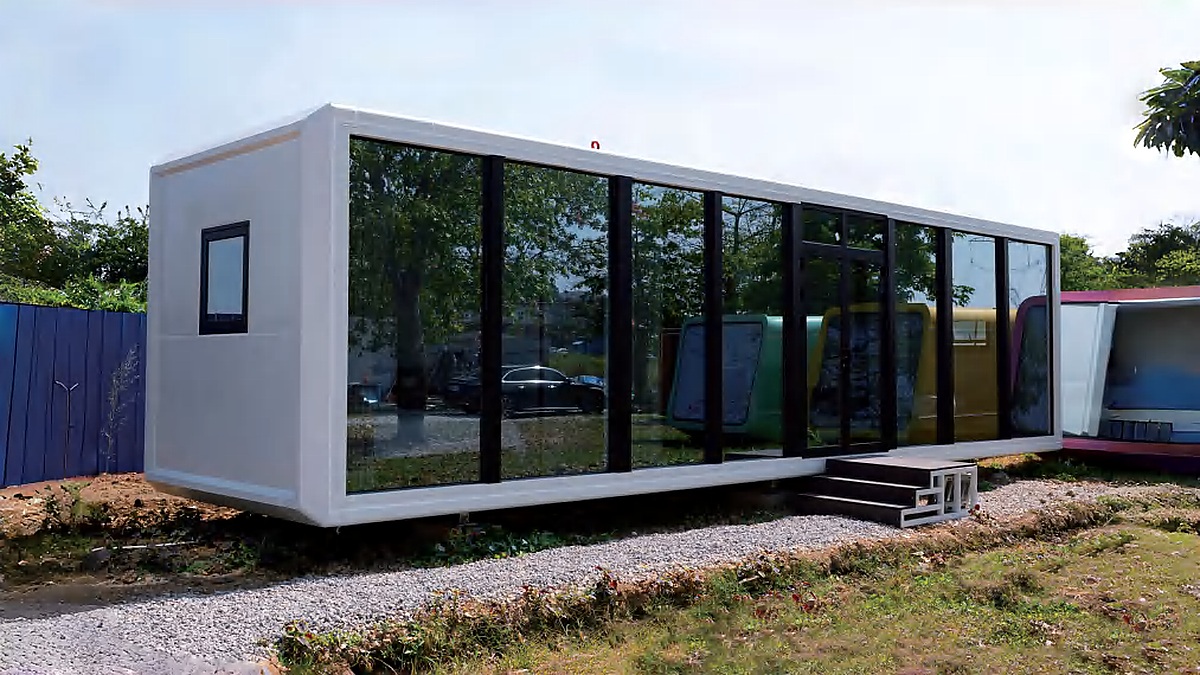
Start with the project
A useful review begins with your site and operating needs, then narrows the product and configuration.
Define occupancy, operating pattern, destination and the outcome the building must support.
Review footprint, layout, transport form and the configuration that should be priced.
Assign access, supports, lifting, utilities, approvals and final installation work.
In plain terms
An apple cabin — also searched as an apple cabin pod or apple cabin house — is a prefabricated accommodation unit with a rounded-corner shell and a glazed elevation. The structure, enclosure, services and interior package are completed in the factory, then the cabin is lifted onto prepared supports and connected on site. Because most versions travel as a finished volume, transport dimensions can influence delivered cost more than floor area does.
Model references
Dimensions shown are current product references. Confirm transport dimensions, the selected layout and final drawing for your order.
Developer selection
D1, D2 and F2 are not three cosmetic versions of the same apple cabin. They create different guest products and different freight plans. Use this first-pass comparison to form the room schedule; the approved drawing remains the order document.
| Model | Room concept | Floor area | Delivery form | Planning role |
|---|---|---|---|---|
| D1 | One-bedroom resort cabin | Approx. 38 m² | Finished out-of-gauge volume | Couples' suite, rental cabin or premium view-facing key |
| D2 | Wider cabin with private balcony | Approx. 52 m² | Finished out-of-gauge volume | Longer-stay suite or a room needing more living width |
| F2 | Three-bedroom duplex suite | Approx. 52 m² total | Two modules; each loads in a 40 HC | Family inventory or sites where standard-container logistics matter |
Guest capacity depends on the approved furniture and room plan. Confirm bed count, bathroom layout, kitchen scope, storage, housekeeping access and accessibility requirements before the model is frozen.
Download the Apple cabin model decision sheetFreight consequence
A 40 HC door opening measures 2.34 m wide and 2.58 m high. Published section dimensions decide the freight method before a price exists.
| Format | Section | Ships as | Why |
|---|---|---|---|
| D1 | 3.30 × 3.20 m | Out of gauge | Over door width and height. Moves as breakbulk or on a flat rack. |
| D2 | 4.40 × 2.45 m | Out of gauge | Over door width. Moves as breakbulk or on a flat rack. |
| F2 | 2.20 × 2.45 m, ×2 | 2 × 40 HC | Each module loads inside a standard container. |
Section is width × height. Out-of-gauge movements are quoted route by route and can change the delivered cost materially. Final loading is confirmed against the approved drawing.
How container fit is calculatedProduct references
Use each image to discuss a specific part of the configuration and delivery plan.
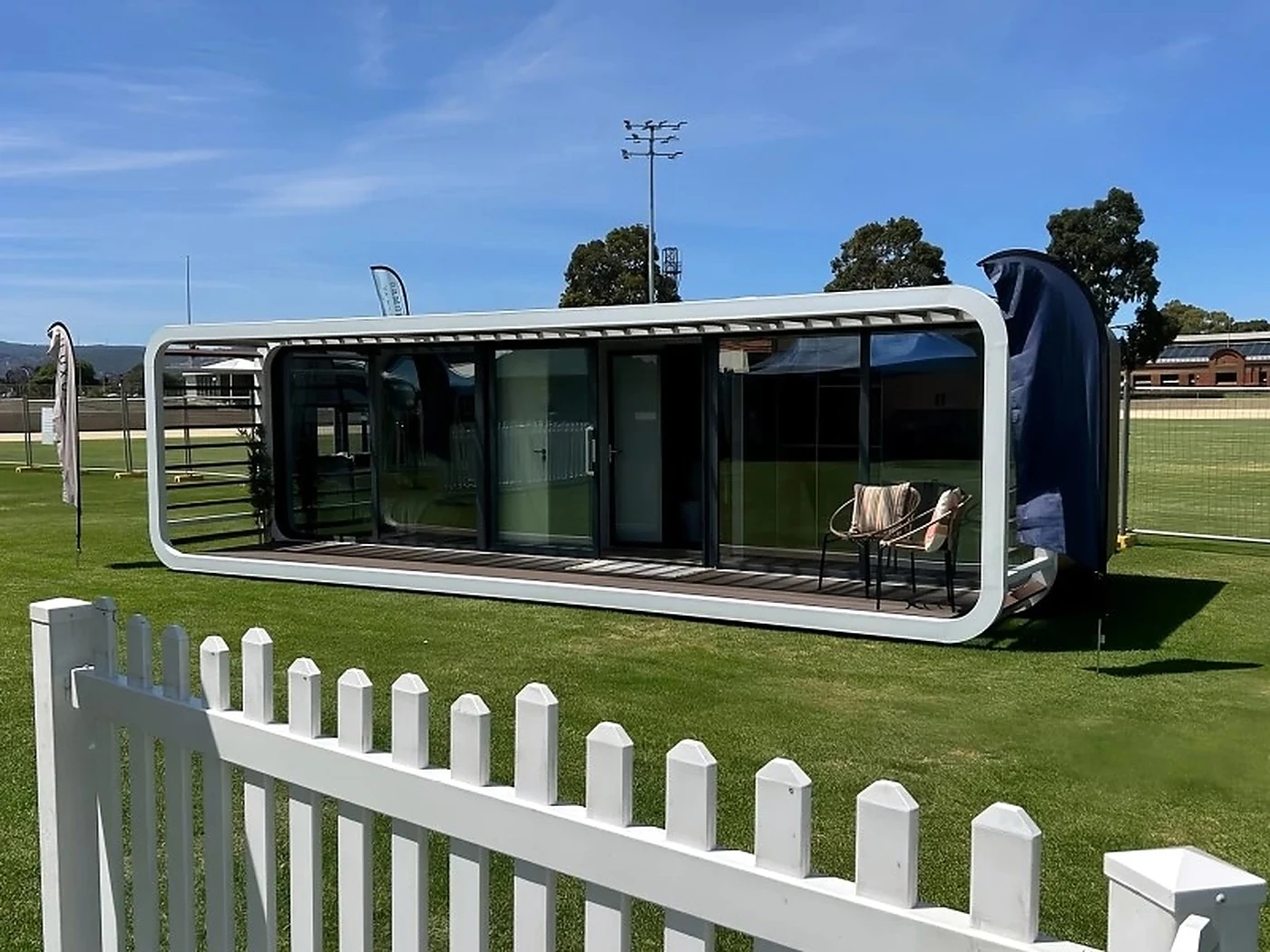
Review external access, deck interfaces, privacy and the relationship between the cabin and its site.
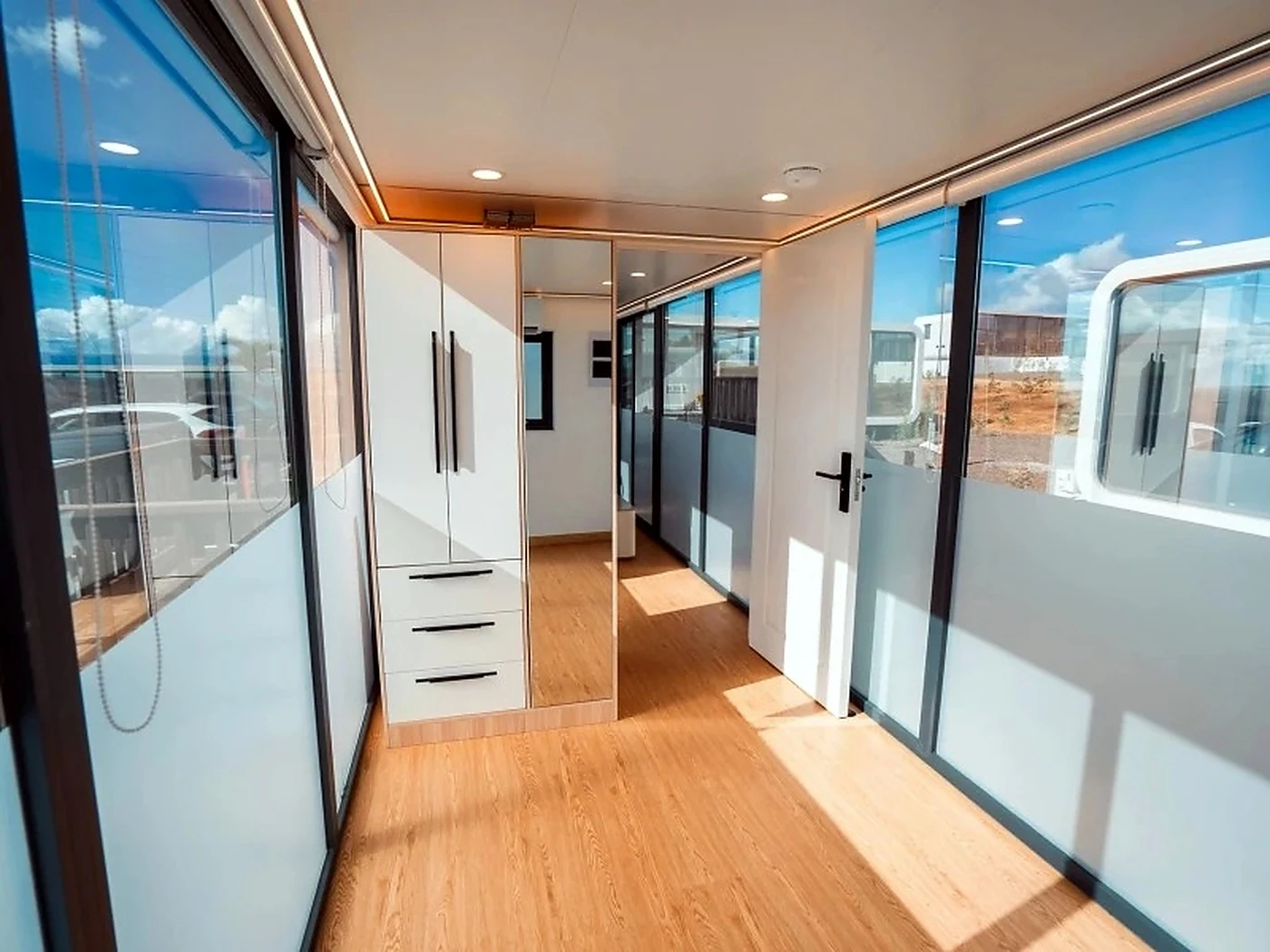
Confirm furniture, wall finish, flooring, lighting and window treatments as a coordinated package.
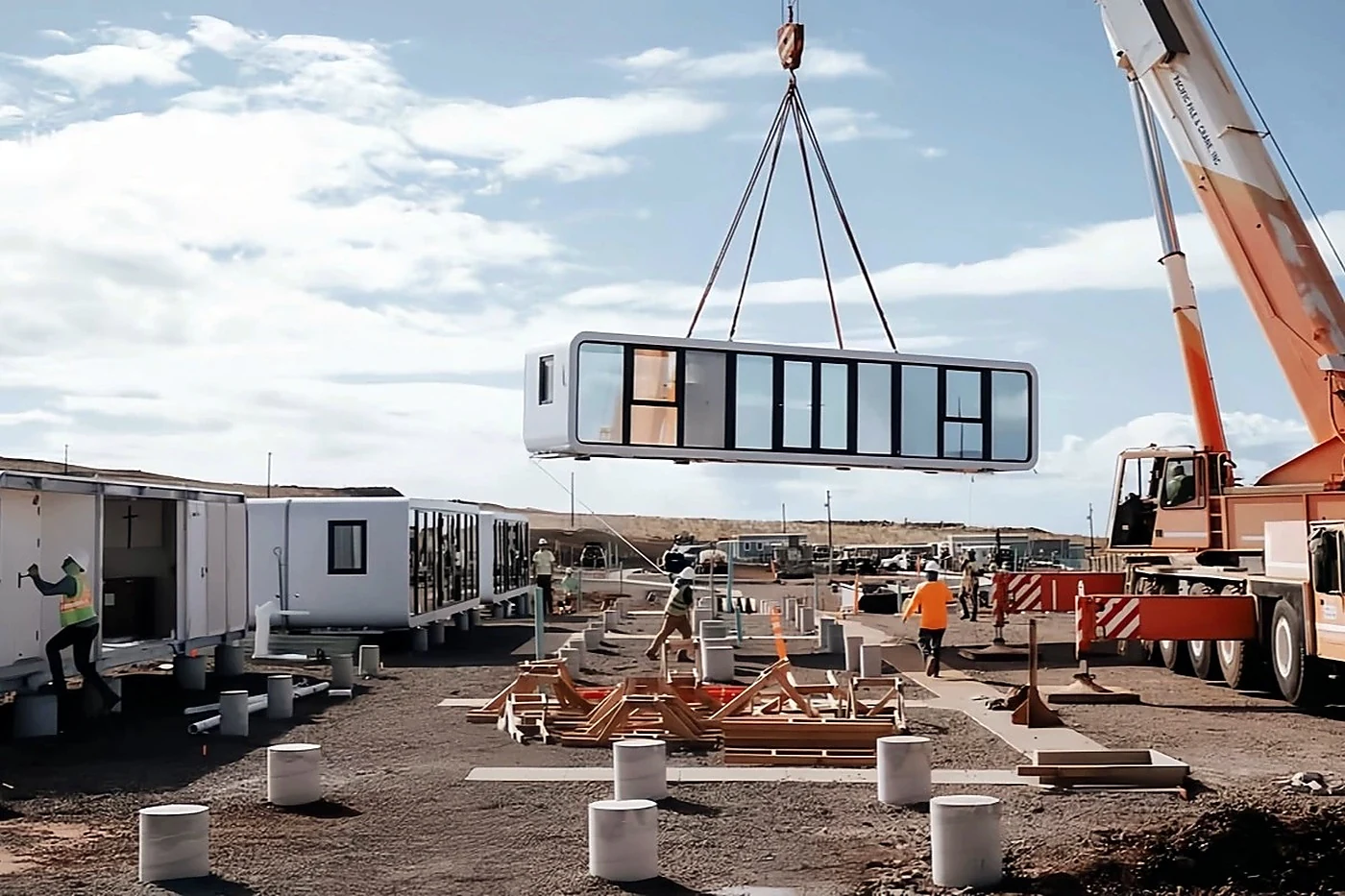
Your receiving plan should define access, crane space, temporary storage, supports and local responsibilities.
Configuration review
Use the quotation and approved drawings to define the product package and local responsibilities.
Reference specifications show a galvanized steel frame with an insulated panel enclosure.
Aluminum cladding and aluminum-framed door and window systems vary by model and finish package.
Wall lining, flooring, cabinetry, bathroom and furniture selections are confirmed per project.
Foundations or supports, lifting, utility connections and approvals are coordinated locally.
Site interfaces
An apple cabin can leave the factory substantially complete, but it is not a permit-free or site-free product. Close these four interfaces before production release.
Check port limits, turning radii, bridge and overhead restrictions, final-road permits, lifting weight, crane radius and the set-down sequence before the cabin drawing is released.
The local engineer confirms soil assumptions, support type, bearing locations, finished levels, drainage and anchorage. The cabin supplier confirms the matching support-point drawing and tolerance.
Agree the destination electrical standard, connected load, water inlet, waste outlet, hot-water system, HVAC and the exact connection positions on the approved service drawing.
The local design professional and authority decide the code path. Request the structural basis, material and component information, drawings, inspection records and installation instructions needed for that review.
Scope boundary
Keep the product package, your project inputs and local site work clear before the order is approved.
Product-family comparison, configuration options, drawings and order information.
Use, destination, quantity, layout priorities, site conditions and target timing.
Approvals, foundations, lifting, utility connections and site installation.
Ordering
On an apple cabin the transport format moves the delivered figure more than the floor area does. D1 and D2 exceed a container door opening and travel as out-of-gauge cargo quoted route by route; F2 splits into two container-legal modules. Quantity, destination and the local scope do the rest.
| Order quantity | Confirmed for the selected format, shipment plan and project phase. |
|---|---|
| Programme | Confirmed after the drawing set, quantity and factory schedule are agreed. |
| How it is quoted | One figure for the agreed scope, with a written exclusions list issued beside it. |
| Payment | Amounts, due points and required release records are defined in the quotation and contract. |
| Inspection | You, or an inspector you appoint, may attend the pre-dispatch inspection or inspect independently, at your cost. |
| Warranty | Periods, included elements, exclusions and claim handling are defined in the project contract. |
Foundations, crane and lifting, utility connections, installation labour and local permits sit with the buyer; engineering, manufacture, inspection, packing and the document set sit with us.
The full landed-cost stack, factory gate to first guestApple cabin RFQ
Send the same information to every bidder. That makes model, freight, site scope and exclusions comparable instead of hiding them inside one unit price.
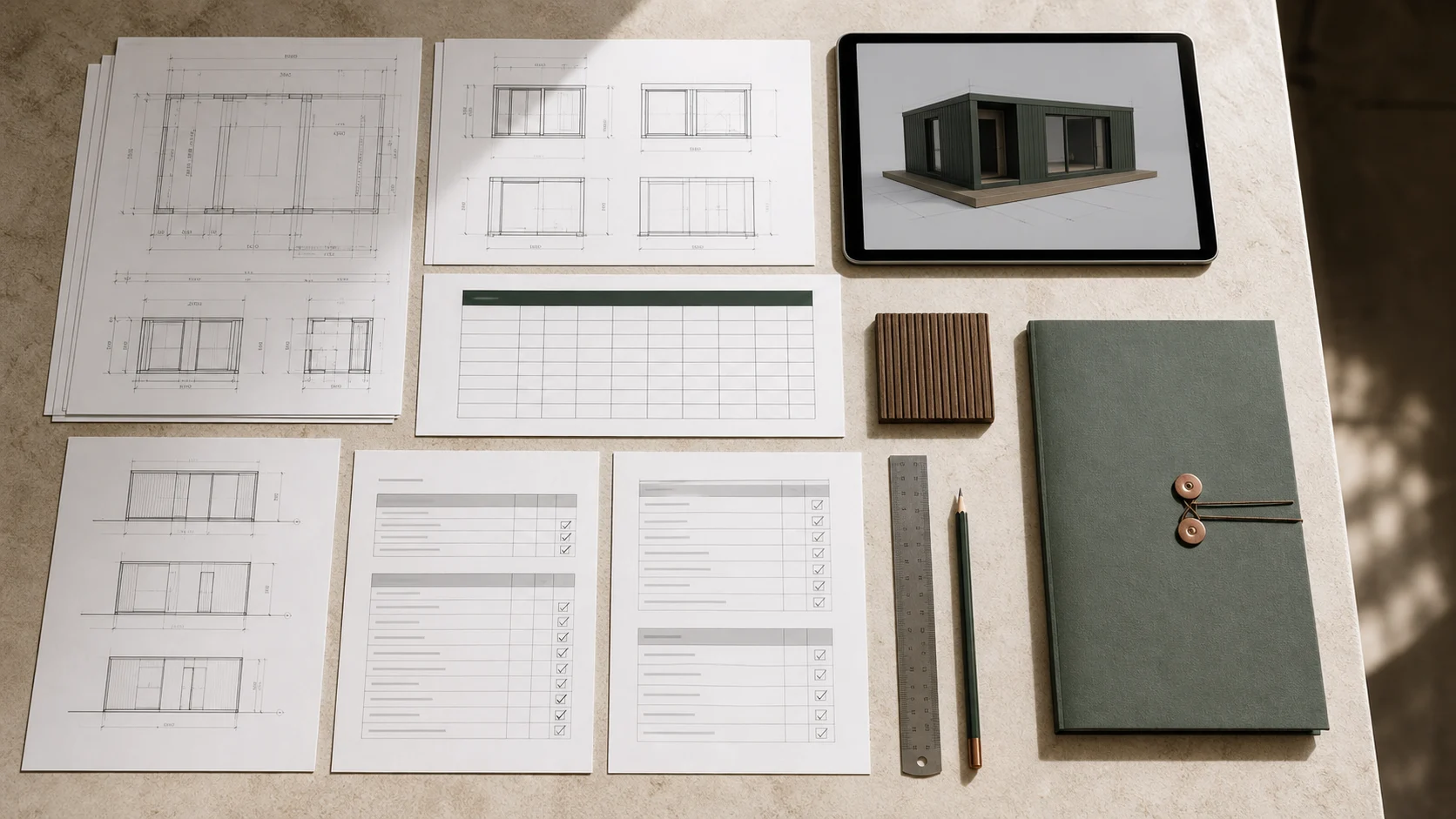
Before quotation
A useful first review connects the building family to your project conditions, rather than treating selection and site planning as separate decisions.
Common questions
A prefabricated cabin with a rounded-corner shell and a glazed long elevation, delivered finished rather than built on site. It is a product format, not a single manufacturer's model.
Usually, yes. Apple cabin, apple cabin pod and apple cabin house are market names for the same rounded, factory-finished modular format. Compare the actual drawing, structure, insulation, room plan and shipping dimensions rather than relying on the name.
Yes, when the room plan, housekeeping access, thermal and acoustic performance, services, approvals and delivery route are planned as one package. D1 and D2 work as signature finished-volume rooms; the split-module F2 can suit family inventory and standard-container logistics.
The F2 format can: each of its two modules loads into a 40 HC. D1 and D2 exceed a container door opening and travel as out-of-gauge cargo, which is quoted route by route.
We quote one figure for the agreed scope rather than publish a list price, because the delivered cost is decided by the transport format before it is decided by the cabin. D1 and D2 move as out-of-gauge cargo priced route by route; F2 loads into two standard containers. Quantity, destination, duty treatment and the local scope — foundations, crane, utility connections and installation labour — complete the figure, and a written exclusions list is issued with the quotation.
They are confirmed for the selected model, approved drawing set, quantity, out-of-gauge route and current factory schedule.
Yes. We inspect against a written plan and issue the report, and you or an inspector you appoint may attend or inspect independently, at your cost. Inspection scope, attendance rights and any payment-release evidence are defined in the quotation and contract.
Start with occupancy, room layout, destination, transport access and unit quantity. These inputs narrow the appropriate footprint.
Finish and furniture choices can be reviewed, but availability and inclusion must be confirmed in the model quotation.
Provide the site, quantity and phases, guest and room brief, destination service standards, access and crane constraints, local approval stage and required delivery date. Ask every supplier to return the same scope, exclusions, shipping method, document schedule, inspection plan and warranty terms.
Next step
Share location, use, quantity, access and timing.
Request review